Professional Confidence Does Not Remove Personal Vulnerability
Running a business or making demanding decisions at work does not mean every romantic judgment will feel equally clear. Dating involves hope, uncertainty and information supplied by another person. A persuasive match may appear to understand your schedule, your achievements and the parts of life that work leaves little room for.
That experience can be meaningful in an honest connection. The difficulty is distinguishing attention from a story designed to earn trust. Do not use your professional competence as a reason to dismiss concerns, and do not shame yourself for enjoying a conversation. Evaluate what is being asked of you as the relationship develops.
For this audience, an offer can be framed as an exclusive opportunity rather than an emergency. Someone may imply that successful people recognize unusual access or act decisively. You do not need to prove sophistication by participating. A dating connection is not a reason to change the standards you would normally apply to financial decisions.
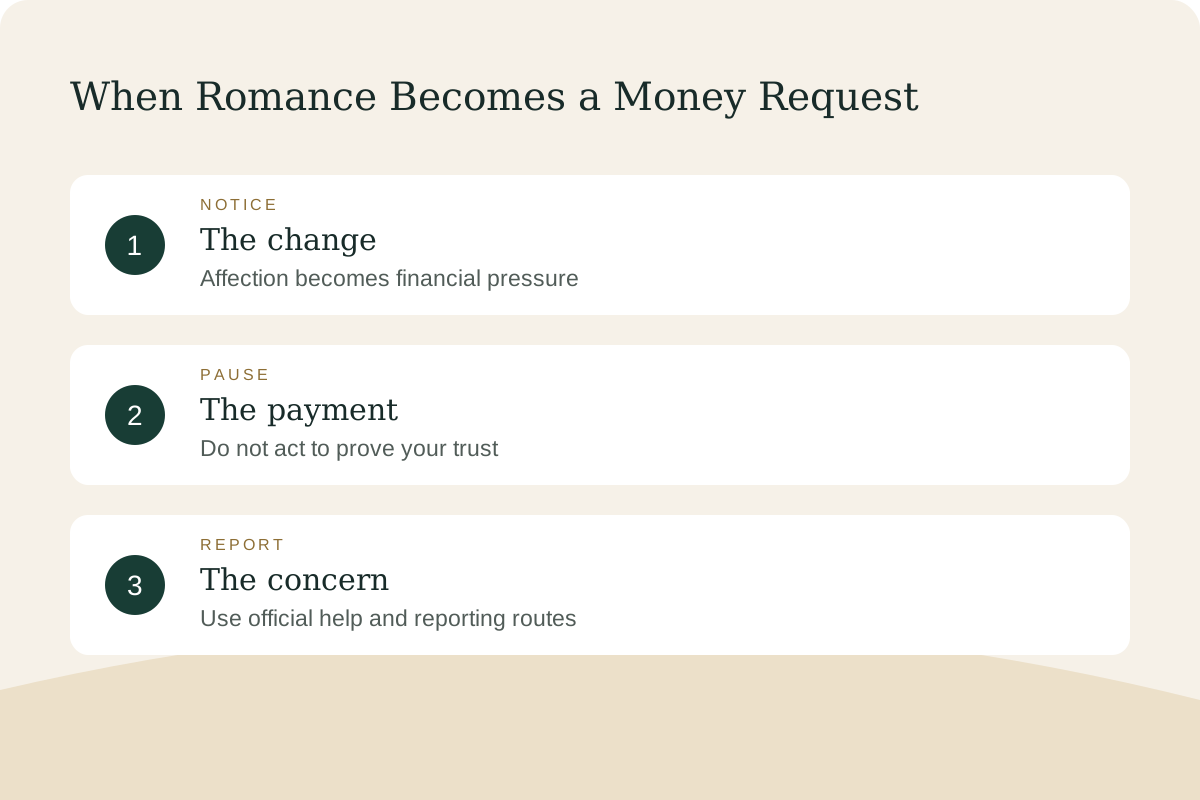
Notice the Change From Connection to Compliance
A useful distinction is between getting to know someone and being directed through a process. The conversation may begin with mutual interests, then shift toward instructions: install this app, use this link, keep the opportunity private, or complete a transfer before a deadline. Pay attention to that change in purpose.
The SEC's relationship-investment-scam guidance describes scammers building trust through online friendship or romance before directing people toward false investments. The personal bond is part of how the financial pitch gains credibility; it does not make the pitch independent of the relationship.
You can refuse the financial conversation without debating every technical claim. “I do not invest through people I meet while dating” sets a boundary that does not depend on proving a particular website fraudulent. If affection becomes conditional on participation, stop treating the exchange as an ordinary disagreement about investment preferences.
Separate Status Claims From Evidence
Expensive photographs, an executive title and fluent financial language can create a coherent impression without establishing what matters. A person may present themselves as too successful to need your money while still asking you to place it somewhere they control or recommend. The absence of a direct request for a personal loan does not make the situation harmless.
Do not let a dating badge do more work than its stated purpose. Photo verification does not establish investment expertise or honest intentions. A financial-status claim is not regulatory authorization, and paid membership is not a character assessment. Verification before meeting explains how to keep these signals separate.
Ask why a new romantic contact is so invested in your financial action. An honest relationship should have room for you to decline. You do not owe anyone a demonstration of trust through a deposit, a transfer, an account opening or access to sensitive information, however impressive their personal story appears.
Recognize Pressure That Sounds Like Opportunity
Pressure is not always loud. It can be expressed as disappointment that you are missing out, concern that you are too cautious, or a promise that participation will help build your future together. Those statements try to make a financial decision carry the emotional weight of the relationship.
Consider the combination of secrecy, urgency and dependence. If you are asked not to discuss the plan with anyone else, told that delay will destroy the opportunity, and directed to rely on the same person for every explanation, you have little room for independent judgment. Step away from the process rather than trying to become an expert while under pressure.
These illustrative statements deserve a pause, not an argument:
- “Use the link I sent; ordinary searches will take you to the wrong place.”
- “Your adviser will not understand this opportunity.”
- “We can build our future if you trust me enough to do this today.”
- “You need to pay another fee before you can access the money.”
The wording may differ. Focus on whether the person is narrowing your choices and isolating the decision from independent scrutiny.
Stop the Transaction Before Solving the Story
If you suspect a scam, stop sending money. The FBI's cryptocurrency investment fraud guidance advises reporting suspected cases to IC3 and providing transaction information. You do not need to understand every part of the scheme before taking that step.
Do not send another payment simply because the first one is now at risk. A demand framed as a release fee, tax or account correction should not be accepted on the romantic contact's authority. Use independently obtained contact details when asking for help from a financial institution or relevant authority, rather than numbers supplied by the suspected scammer.
Preserve transaction references, dates, payment details and the account identifiers you already have. Follow the dating platform's rules for submitting relevant information through its reporting process. Avoid retaliatory posting or a prolonged confrontation, which can expose more of your personal information without resolving the financial problem.
Make Room for an Outside Perspective
Secrecy makes an emotionally difficult situation harder to evaluate. Tell a trusted person what you were asked to do, using concrete details rather than only describing how convincing or caring the match seemed. A friend can help you slow down without needing to prove that every affectionate message was false.
If someone you care about may be affected, avoid ridicule. “How could you believe that?” can make it harder for them to share the next development. Ask about the requested action, the payment route and whether they have spoken with an independent source. Keep the conversation focused on stopping additional exposure.
For successful professionals, embarrassment can include fear that colleagues will question their competence. That concern should not prevent asking for help. The important next decision is what to do with the information available now. Your job title does not require you to handle a suspected crime alone or pretend that nothing happened.
Return to Dating With a Clear Financial Boundary
A suspected scam can make every new introduction feel doubtful. You do not have to choose between trusting immediately and abandoning dating altogether. Use a simple boundary that remains consistent across matches: romantic interest does not create a route to your investments, accounts or financial rescue.
The wider privacy and trust guidance supports a gradual introduction. Keep early conversations grounded in ordinary life and make meeting decisions gradually. A person who wants a relationship should be able to respect financial independence and reasonable privacy. The financial boundaries article offers language for declining requests without turning the conversation into a negotiation over your generosity.
Millionaire dating is still dating. Shared ambition can be attractive, but an invitation to invest is not a necessary part of getting acquainted. When you are ready to continue, focus on respectful behavior, realistic availability and a connection that remains worthwhile when money is removed from the conversation.
Consumer-safety guidance. The linked FBI and SEC resources provide reporting and fraud information; this article does not assess individual investments or guarantee recovery.